 Farshad Ghobadvand
My work at Airport Kia spans Google Ads, Meta Ads, content, website experiences, CRM analysis and the tools that connect them. The practical question underneath that work is consistent: what should happen next for the customer, and who needs the information to make it happen?
A campaign can create an enquiry. The next steps involve a landing page, factual vehicle information, an understandable message, a usable CRM record and someone responsible for follow-up. I use connected digital marketing to describe the work of designing and managing that whole sequence.
This guide brings together lessons from my day-to-day marketing responsibilities and the systems I have designed and built. The linked articles go deeper into the decisions behind the interfaces, content workflows and measurement.
Start with the customer journey and the business goal
I begin by defining the action the business can use: an enquiry with enough context to answer, a booked conversation, or a follow-up that reaches the right person. That definition informs the audience, offer, creative, destination and measurement. A lead count becomes more useful when everyone understands what a lead represents.
At a dealership, the same person may encounter a vehicle through paid media, a marketplace listing, local search or a social story. Each touchpoint needs a clear proposition and a sensible next step. I map the information that should survive the move between those touchpoints, including the vehicle or service that prompted the conversation.
- Define the customer action and the business response.
- Connect the audience and offer to a relevant destination.
- Decide which context the next person in the journey will need.
Make the handoff part of the marketing work
I consider the handoff from marketing to sales while designing the acquisition workflow. The CRM record needs useful context, an owner and a clear route to follow-up. An attractive form or campaign is only the visible beginning of that work.
The Lead Operations workspace I built brings priority, recent activity, buying signals, ownership and next follow-up into one working view. Moving from the queue to an individual lead keeps the reason for an action close to the person reviewing it. The same principle applies to a messaging assistant: a human handoff should carry the conversation forward.
Give creative production reliable inputs
Content production becomes easier to manage when the factual inputs, channel format and review step are explicit. A vehicle story needs an accurate subject; a local editorial post needs a relevant topic; a campaign visual needs a clear message and composition.
My content tools support different parts of that process. Instagram Story Studio begins with an inventory vehicle and setting. Visual Studio brings reusable layouts and visual controls together. The Google Business Profile editorial workspace connects topic inputs with a composition preview. Keeping these tasks focused helps me review the details before preparing the output.
Use measurement to choose the next investigation
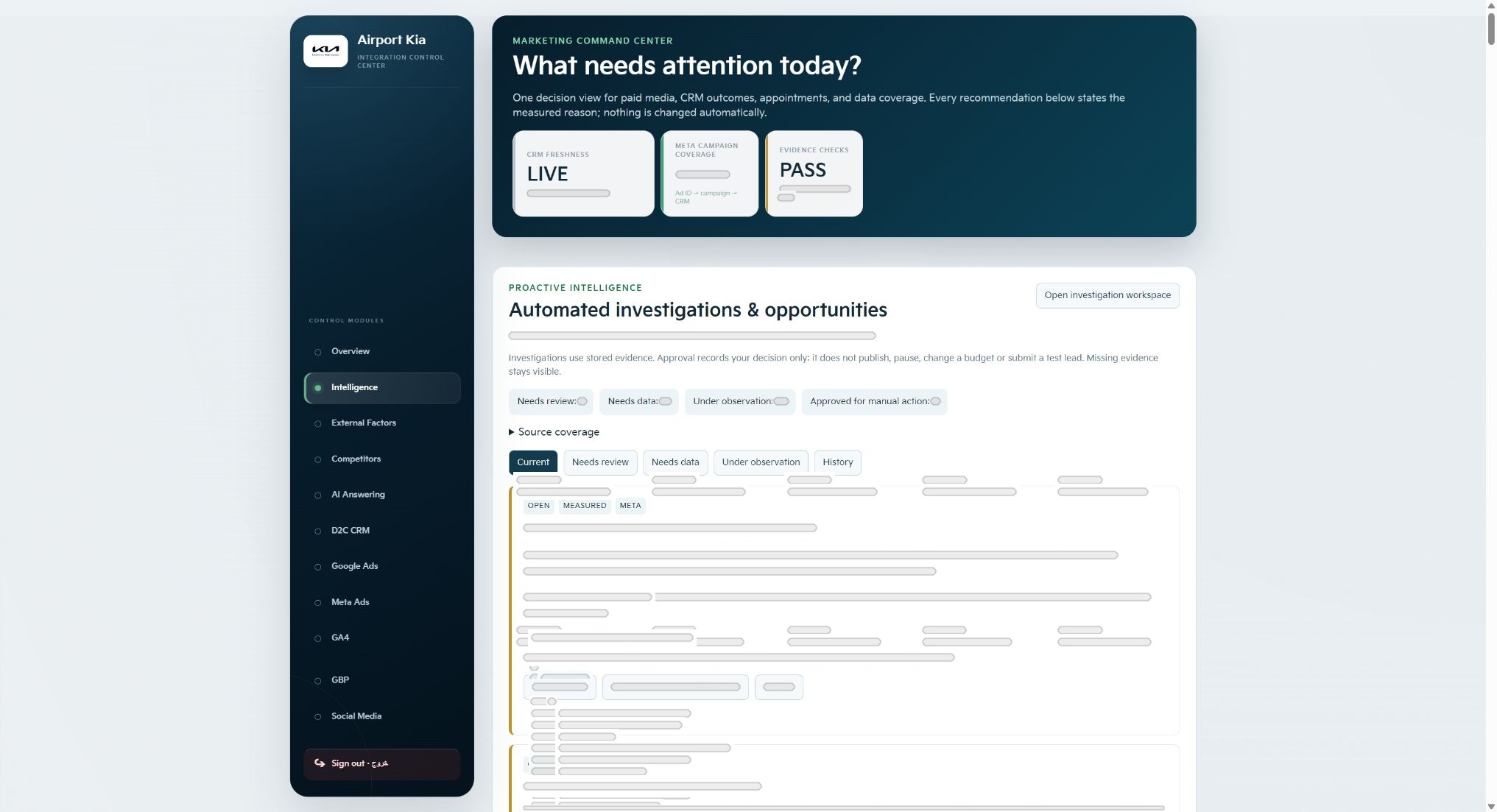
I built Marketing Intelligence around three perspectives: a Command Center, Lead Operations and External Context. The Command Center makes data freshness, source coverage and investigation items visible. This gives a review a starting point and a route into the supporting evidence.
A change in total leads deserves a careful comparison. I check the date window, counting definition and source coverage before interpreting a percentage. Campaign attribution, lead quality and sales outcomes answer further questions and need their own evidence.
Keep the strategy connected to the work
The tools support a marketing process that still needs judgment: understanding the audience, selecting a useful offer, choosing channels, reviewing creative and deciding what to change. I keep those decisions visible when translating the process into software or automation.
In VFlows Marketing, I gave business context, research, brand inputs, the content plan and the publishing calendar distinct roles. The plan explains the purpose of upcoming work; the calendar organizes its timing. This structure makes the dependency on an approved strategy understandable before production begins.
A useful review asks where the journey becomes unclear, what evidence is missing and which handoff needs attention. That is how I connect the digital marketing work with the systems underneath it, one practical decision at a time.
Key takeaways
- Define a meaningful customer action before choosing the execution.
- Carry useful context through the website, messaging and CRM handoffs.
- Build content workflows around accurate inputs and review.
- Use data quality and matched definitions to frame marketing decisions.
Sources & further reading
Expanded from my authored LinkedIn series and the connected work presented in my portfolio.