 Farshad Ghobadvand
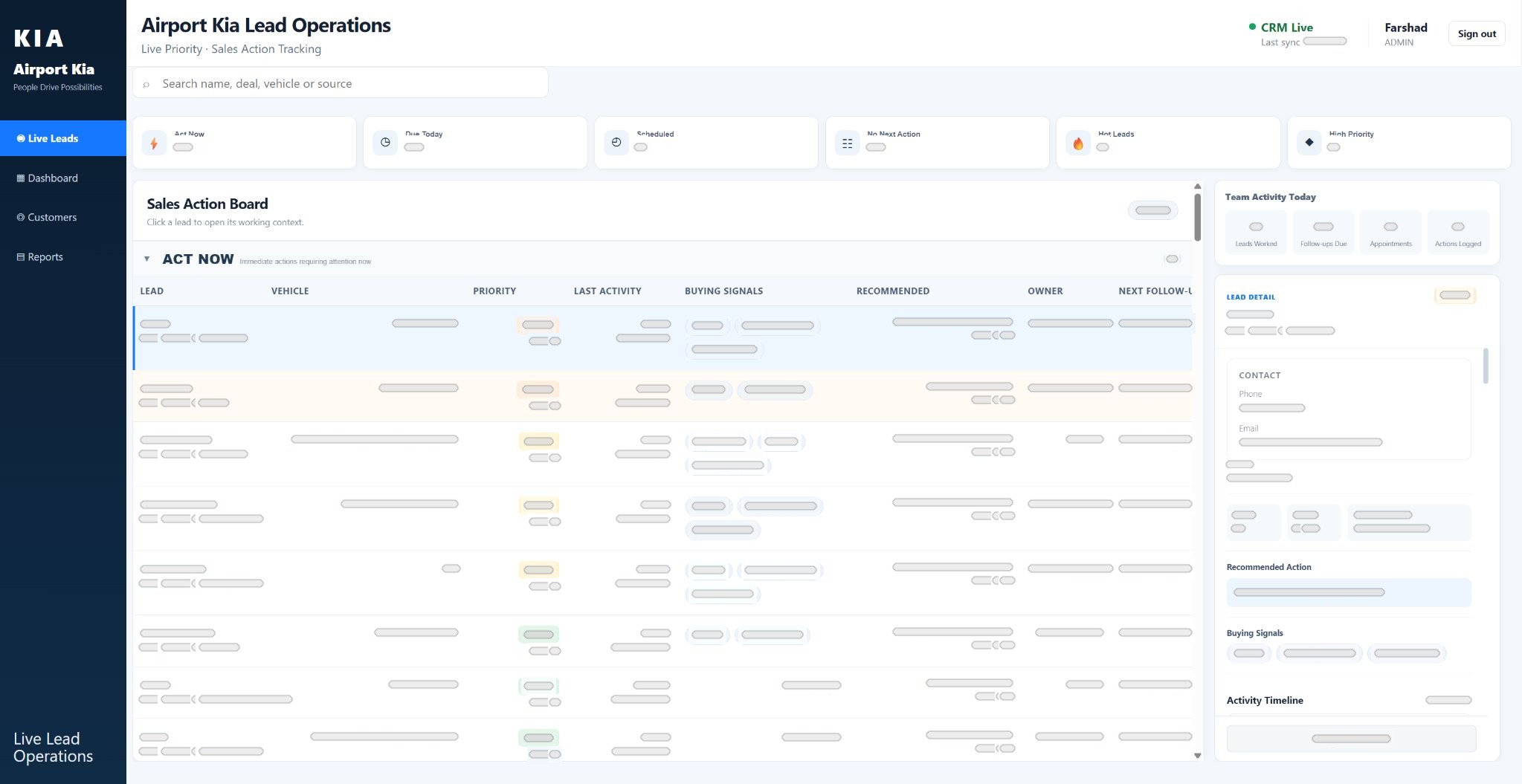
Which lead needs attention, and what should happen next? I built the Lead Operations workspace around those two questions. They connect the work of generating an enquiry with the responsibility of continuing the customer conversation.
The action board brings priority, recent activity, buying signals, ownership and next follow-up into the same working context. Selecting a lead opens its detail beside the queue, so the reason for the next step stays close to the work.
Begin with the handoff from acquisition
A new enquiry starts another workflow. The information captured through a campaign or website needs to remain useful when someone reviews the record. I think about this transition while working across marketing, CRM integration and the interface.
The first design question is what the person responsible for follow-up needs to understand. Recent activity, the context behind a priority and a clear owner support that understanding. They also make it possible to review the queue without treating every record as an isolated task.
Put the reason beside the priority
Priority is most useful when someone can inspect the context behind it. In this workspace, recent activity and buying signals sit beside a recommended action. The detail panel supports the move from deciding which record to open to understanding what needs attention.
When reviewing a lead workflow, I ask whether the next action can be explained from the information shown. A reviewer should be able to distinguish a contact needed today, a schedule that deserves review and an overdue follow-up. This is an interface and workflow question as much as a data question.
- What happened in the latest interaction?
- Which information supports the current priority?
- What follow-up is due, and who owns it?
Keep responsibility attached to the next step
Ownership is part of the workflow. The sales action board includes an owner and next follow-up, and action logging is restricted to the assigned sales representative. That relationship matters when translating a team process into a working interface.
I use four questions to review a handoff: which lead needs attention, what happened last, who owns the next step and what follow-up is due. The answers should stay coherent as a person moves from the queue into the detail view.
Review the workflow with realistic evidence
The portfolio presents actual interfaces with identifying customer fields and internal business information concealed. The later sales-workspace walkthrough was captured in an admin session; that capture context matters when explaining what the images demonstrate.
The screenshots support a discussion of interface structure and workflow decisions. To evaluate business performance, I would review separate evidence for follow-up, lead quality and outcomes. Total new CRM leads are one useful measure, while the quality of the handoff is another part of the investigation.
Key takeaways
- Connect the enquiry to the information needed for follow-up.
- Keep the reason for a priority close to the recommended action.
- Make ownership and the due follow-up visible.
- Evaluate workflow design and business performance with the appropriate evidence.
Sources & further reading
Expanded from my authored Lead Operations and corrected Sales Follow-up content. The sales-workspace captures were made in an admin session.