 Farshad Ghobadvand
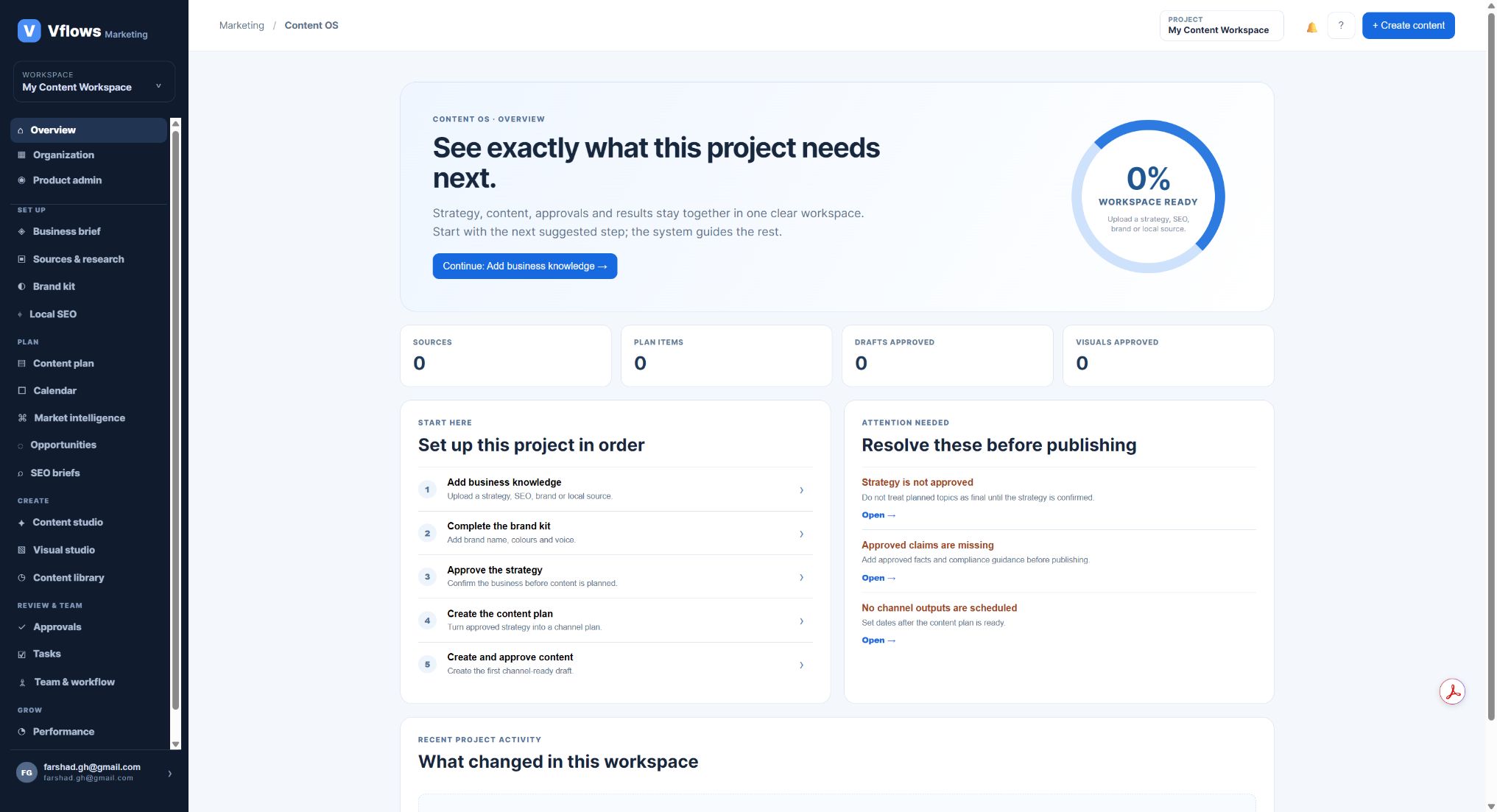
What should a system understand before it helps plan content? That question shaped the structure of VFlows Marketing, the content-operations workspace I designed and built.
I gave the business brief, research and brand inputs their own place before content planning. The sequence connects business context with an approved strategy, a content plan, creation and review, then a publishing calendar.
Collect the context that changes a content decision
A useful brief explains the business, audience and purpose of the work. Research and brand inputs then help shape the decisions that follow. These inputs are valuable because they affect what a piece of content should say, who it should serve and how it should sound.
When I translate that process into a product, I consider where each input belongs and how the next stage will use it. Giving information a clear place makes the dependency understandable to the person working through the sequence.
- What business goal should the content support?
- Which audience question or need does it address?
- Which research and brand inputs should guide the message?
Give the plan and calendar distinct jobs
I gave the content plan and calendar separate views. The plan explains the upcoming work and its purpose. The calendar organizes that work in time. Keeping those jobs clear helps a person understand whether they are deciding what to create or arranging the timing of approved work.
This distinction also guides review. Before placing an item on the calendar, I want to understand its audience, message, intended action and relationship to the business goal. A publishing date then becomes an operational decision with a clear reason behind it.
Explain what the next step depends on
An unpopulated workspace still needs to make sense. The VFlows Marketing overview and content-plan views explain when the next step depends on an approved strategy or plan. That keeps the process legible before someone has added content.
The portfolio captures intentionally show this state. They demonstrate the structure, interfaces and guidance of the product. I use them to explain the design decisions without presenting an empty workspace as an adopted content programme or claiming unmeasured production results.
Carry the reason into creation and review
Once the plan is approved, the production brief needs to preserve the reasoning behind it. The person preparing the visual or copy should understand the audience, factual inputs and expected next action. Review can then assess the work against that purpose.
My focused content tools apply this principle to particular tasks: an inventory vehicle for an Instagram story, reusable composition controls for a visual and topic inputs for local editorial content. The broader workflow gives those production decisions a shared context.
For a practical review, choose one planned item and trace it from the business brief to its intended output. If the purpose becomes unclear at a handoff, improve that handoff before increasing production volume. It is a useful way to evaluate the process as well as the interface.
Key takeaways
- Collect the business and audience context before planning.
- Use the plan to explain purpose and the calendar to organize timing.
- Make approval dependencies understandable.
- Carry the reason for each item into production and review.
Sources & further reading
Expanded from my authored VFlows Marketing introduction and Before the Content Plan series. Interface examples show an unpopulated workspace.