 Farshad Ghobadvand
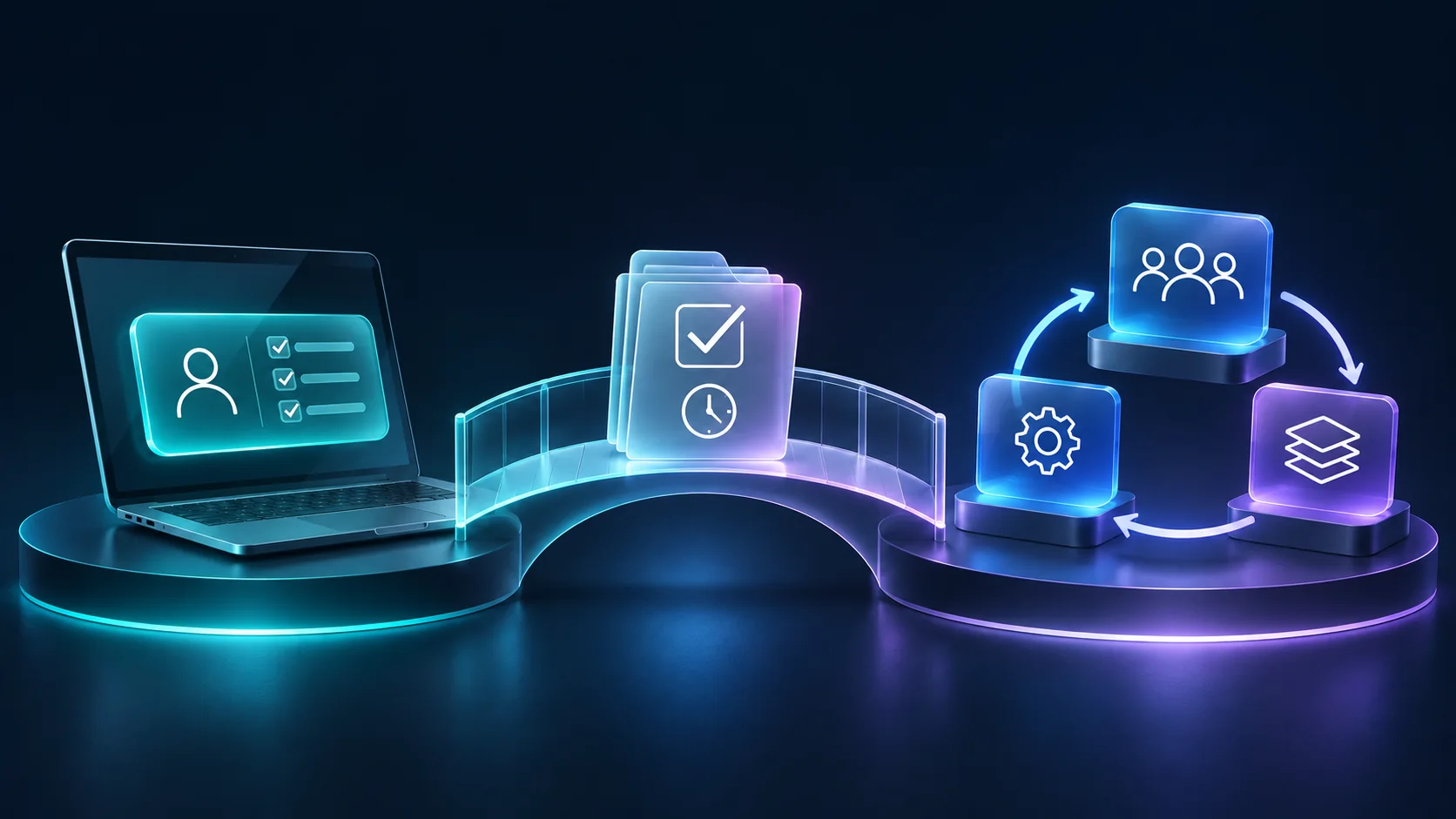
On November 10, 2026, n8n Labs introduced Nod as a research preview: a standalone personal agent, separate from n8n. Its announcement distinguishes work belonging to one person from processes a business shares. That distinction is useful for marketers deciding where an AI assistant should fit.
The practical question is who owns the task when it becomes part of everyday business. I would evaluate the work, its deadline and its handoff before choosing the setup. This is a proposed evaluation method based on official documentation, not a hands-on Nod review or a recommendation to connect a live customer system.
Start with the work and the person responsible
Make a short inventory of recurring marketing jobs. Preparing your own research notes, collecting approved campaign references and drafting questions for a review can have a single owner. Receiving enquiries, assigning follow-up and maintaining the record used by several colleagues have wider dependencies.
For each task, write down its trigger, approved inputs, output, recipient and consequence of a missed run. Then ask whether another person could continue it from the record left behind. A task can begin as personal assistance and become an operational dependency without anyone explicitly making that decision.
Nod’s announcement describes one owner per installation and says an n8n account is not required. Those product boundaries do not determine your business process for you. Decide which work can remain personal and which needs a shared owner, access model and recovery procedure.
Specify the handover before automating it
A useful handover gives the next person enough context to act: what happened, which source supports it, who is responsible and when attention is needed. A generated summary without those details may simply move the investigation to someone else.
Consider the difference between preparing a campaign review for yourself and routing an enquiry to sales. The first can end with a private draft. The second needs a durable record of assignment and delivery, a way to recognise an existing enquiry and a visible route for exceptions.
Define completion from the recipient’s perspective. A prepared message, an attempted submission and a confirmed record in the intended destination are different states. Keep that distinction in the operating instructions so an uncertain result leads to verification before another attempt.
Check where the work runs and what happens when it stops
Nod’s scheduling documentation says a local assistant needs the app running and the computer awake. A self-hosted server can continue after its client closes if the server remains awake and connected. Missed scheduled work can resume later; that is different from meeting a time-sensitive response deadline.
Its current desktop installation guide lists macOS 14 or later and Windows 11 x64. A local Windows assistant also needs WSL 2, hardware virtualization and at least 20 GB of free disk space. Check the current guide and the actual machine rather than assuming every marketing laptop is ready.
For a proposed pilot, name the person who checks failures and the point at which manual work takes over. Include a restart test and an unavailable-source test. Moving a process to an always-on environment still requires monitoring, maintained access and someone responsible for recovery.
Pilot one review brief before a customer-facing process
Imagine a small home-service business preparing its weekly marketing review. This is a hypothetical example, not a client implementation or measured result. Start with approved, non-identifying sample inputs: a campaign summary, an enquiry-count definition and notes about missing information.
Ask the assistant to prepare a private review brief with source dates, unanswered questions and suggested investigations. Keep sending, publishing, budget changes and CRM writes outside this first task. A reviewer should be able to trace each observation to its input and reject an unsupported interpretation.
If the process later belongs in n8n, Nod’s integration guide describes building a draft and testing with sample data, substituting samples for steps that contact external services. That can help inspect the intended payload, but it does not establish real delivery or correct destination permissions. Review those separately before a live run.
- Define one input set and one private output.
- Include a missing source and a deliberately ambiguous date.
- Inspect the brief for unsupported conclusions and missing context.
- Confirm that an uncertain result does not cause a duplicate action.
- Record the changes needed before repeating or expanding the task.
Review the data route as well as the installation
A local installation does not mean every task stays on the device. Nod’s privacy documentation says connected model services receive the conversation, material read for the task and screenshots. Connected applications and connection services also participate in the route. Review that route before supplying business information.
The same documentation lists usage sharing as on by default and conversation traces as off by default. It explains that recognised personal details are removed from shared traces, while some details may remain. Treat pseudonymisation as a limited control, not a promise that a conversation is anonymous.
For the pilot, use synthetic examples or approved public material and document which services receive it. Identify who can approve a broader input set. Avoid giving an assistant a whole customer export when a small, non-identifying sample can answer the process question.
Choose a production home with an explicit acceptance test
Nod’s approvals guide describes checks against the work requested and the owner’s rules; it also says the checker can be wrong. Approval of an action does not establish that the underlying campaign interpretation is sound. Keep factual review, permission and verification of the result as separate responsibilities.
I would keep a task personal while its owner can review it, recover it and tolerate a delay. I would assess a shared workflow when colleagues depend on its timing, records or customer response. This is an operating decision based on the task, not a claim that one product is universally more reliable.
Before making that move, require an understandable record of what ran, which inputs it used, what changed and who handles an exception. Review correction effort, unresolved failures and missed deadlines during the pilot. Those observations guide the next decision; they are not evidence of revenue gains or a promised saving.
- Can someone else understand and maintain the process?
- Can the team distinguish a draft, an attempt and a verified result?
- Is there a clear owner for access, failures and changes?
- Can the process stop safely and resume without duplicating work?
Key takeaways
- Classify work by ownership, timing and the consequence of failure.
- Define a useful handover before choosing the assistant.
- Check local runtime, recovery and data-sharing conditions.
- Use a private sample-based pilot before external actions.
- Move recurring work deliberately, with a named owner and a verifiable result.
Sources & further reading
- n8n Labs: Nod research-preview announcement, November 10, 2026
- Nod documentation: schedules and background work
- Nod documentation: desktop installation and requirements
- Nod documentation: building and testing with n8n
- Nod documentation: your data and privacy
- Nod documentation: approvals and the trust check
Official n8n/Nod sources checked November 13, 2026. The research-preview announcement is dated November 10. Scheduling, installation, privacy and approvals pages display November 13 updates; the n8n integration guide displays October 26. Documentation updates are not treated as new feature-launch dates. These same-vendor sources describe the product, not independently verified reliability. The evaluation method and hypothetical business example are original analysis. No installation, hands-on test, customer-data access, endorsement or performance result is claimed.