Downtown visibility and appointment intent are different questions.
The Town of Newmarket describes the Main Street business district and its association, including promotional activity and community events. That gives us a verified local context for discussing discovery. It does not establish how many people search for your service, which neighbourhood they come from or whether an event visitor wants an appointment.
My recommendation is to separate these purposes. A campaign about a timely offer can build awareness; a service page should explain suitability, location and the actual next step. For businesses outside downtown, we would use their real address and catchment instead of borrowing Main Street relevance. Existing enquiries and account evidence should guide the priority.
Practical priorities for your business.
Make the service and location easy to verify.
Review the pages and eligible Business Profile together. Check service descriptions, contact details, branch information and mobile directions. Use a useful page for each genuinely different service, with clear answers about the appointment process. Search Console observations and relevant query research help decide what needs work before expanding the site.
Local SEO & Search VisibilityMatch the offer to a workable enquiry route.
Agree on the audience, offer and receiving channel before building the campaign. Check that creative, landing pages and messages use the same current information. A lead form submission, a Messenger conversation and a confirmed appointment are separate events; reporting should preserve those differences rather than treating every response as a booking.
Meta Ads ManagementKeep follow-up connected to a person.
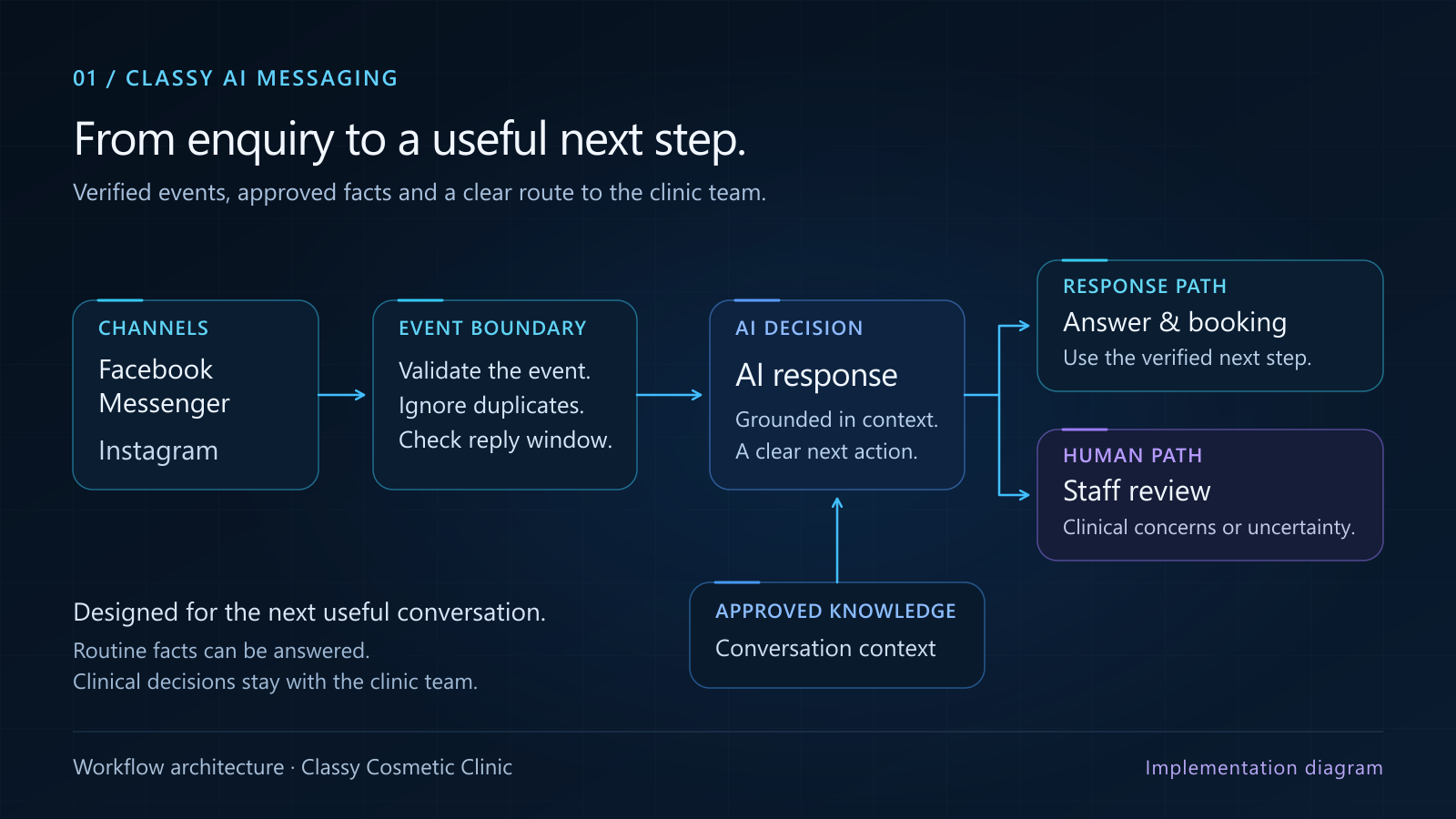
Map who receives an enquiry, what information they need and how the next action is recorded. Automation can help route routine questions and flag unfinished follow-up. Approved business facts and a staff handoff come first. Return-visit reminders need a suitable permission basis, accurate records and a way for the customer to stop them.
AI, CRM & Marketing AutomationAn appointment journey for a small service studio.
Consider a fictional Newmarket studio offering bookable consultations. This example explains how I would connect acquisition and follow-up; it is not a client result, a claim about local demand or evidence that a particular booking platform is already installed.
- 01
Clarify the visit.
Choose one consultation type, confirm what it includes and explain any preparation. Show the genuine location and whether the customer is requesting a time or selecting live availability.
- 02
Carry the question forward.
Connect the relevant page or ad to a short enquiry. Pass the requested service and preferred contact method to the responsible person without asking the customer to repeat the whole conversation.
- 03
Review the appointment outcome.
Record whether the enquiry was answered, scheduled, attended or closed. Review why suitable enquiries stalled. Any reminder or return-visit workflow follows the agreed customer permissions and real service requirements.
Start with the journey you already have.
Bring your website, main services, enquiry channels and an honest picture of appointment capacity. We can identify one practical first project: a search and service-page review, an ad-to-enquiry improvement or a defined follow-up workflow. Scope, access, approval and ownership are agreed before implementation.
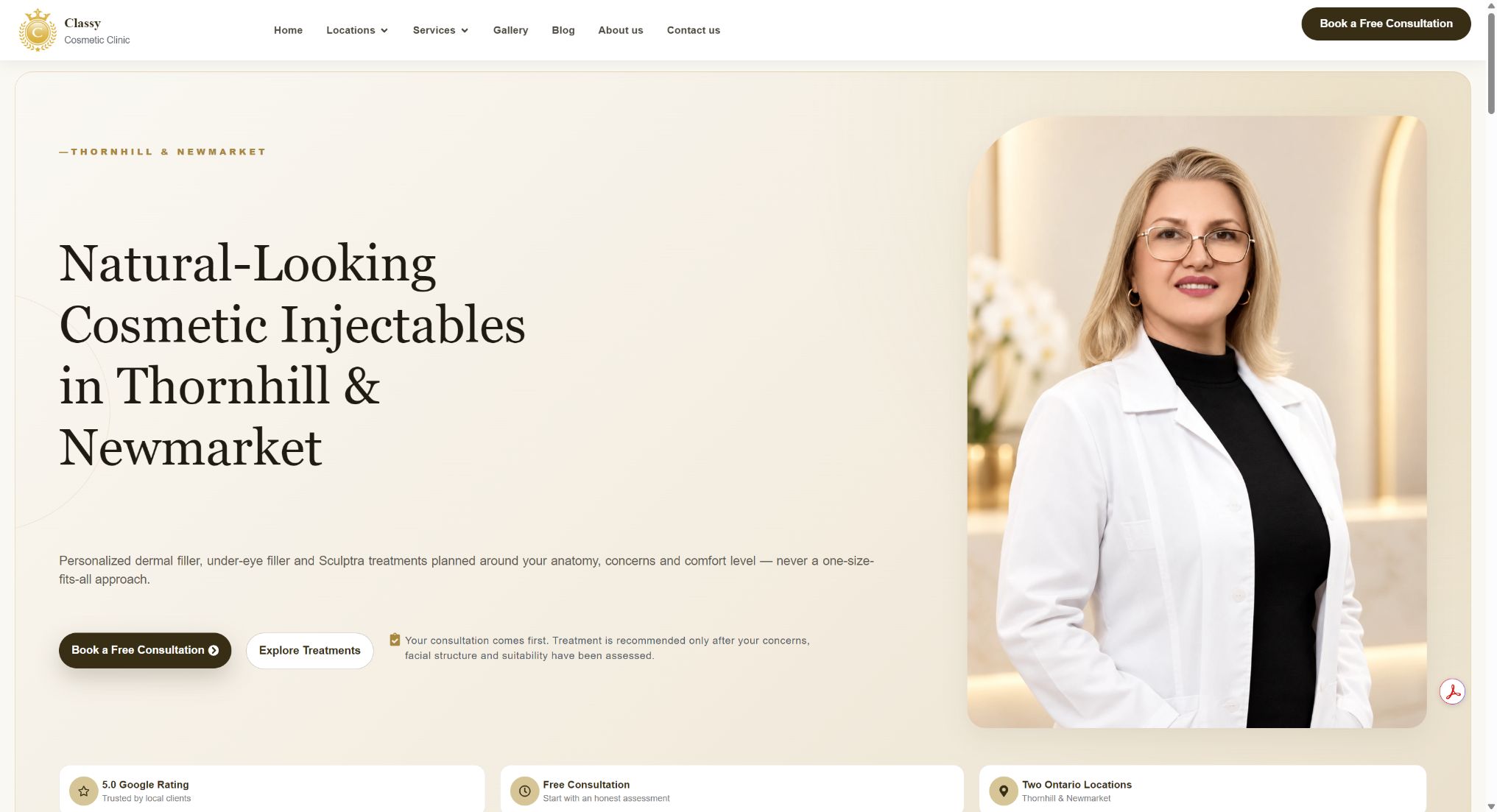
The Classy website and AI messaging cases linked here show relevant service information and conversation design. They are examples of my work, not proof of results for every Newmarket business or a claim that every branch uses the same process. We can discuss your project in English or Persian.
Questions about the work
Do we need more enquiries or better follow-up first?
We would inspect both. If suitable enquiries are waiting without an owner or next action, increasing ad spend may add to the queue. If the receiving process is sound but relevant discovery is limited, search or advertising may deserve the first investment.
Can AI confirm appointments automatically?
Only when the agreed implementation can verify the actual booking and its status. Answering a question or sharing a booking link does not confirm a time. Uncertain availability, sensitive questions and requests for a person need a defined human route.
Can the same plan support repeat visits?
Yes, when repeat contact is appropriate to the service and the customer permissions support it. We first define useful timing, the source of the records and the person responsible. A reminder being sent is not evidence that the customer returned.