 Farshad Ghobadvand
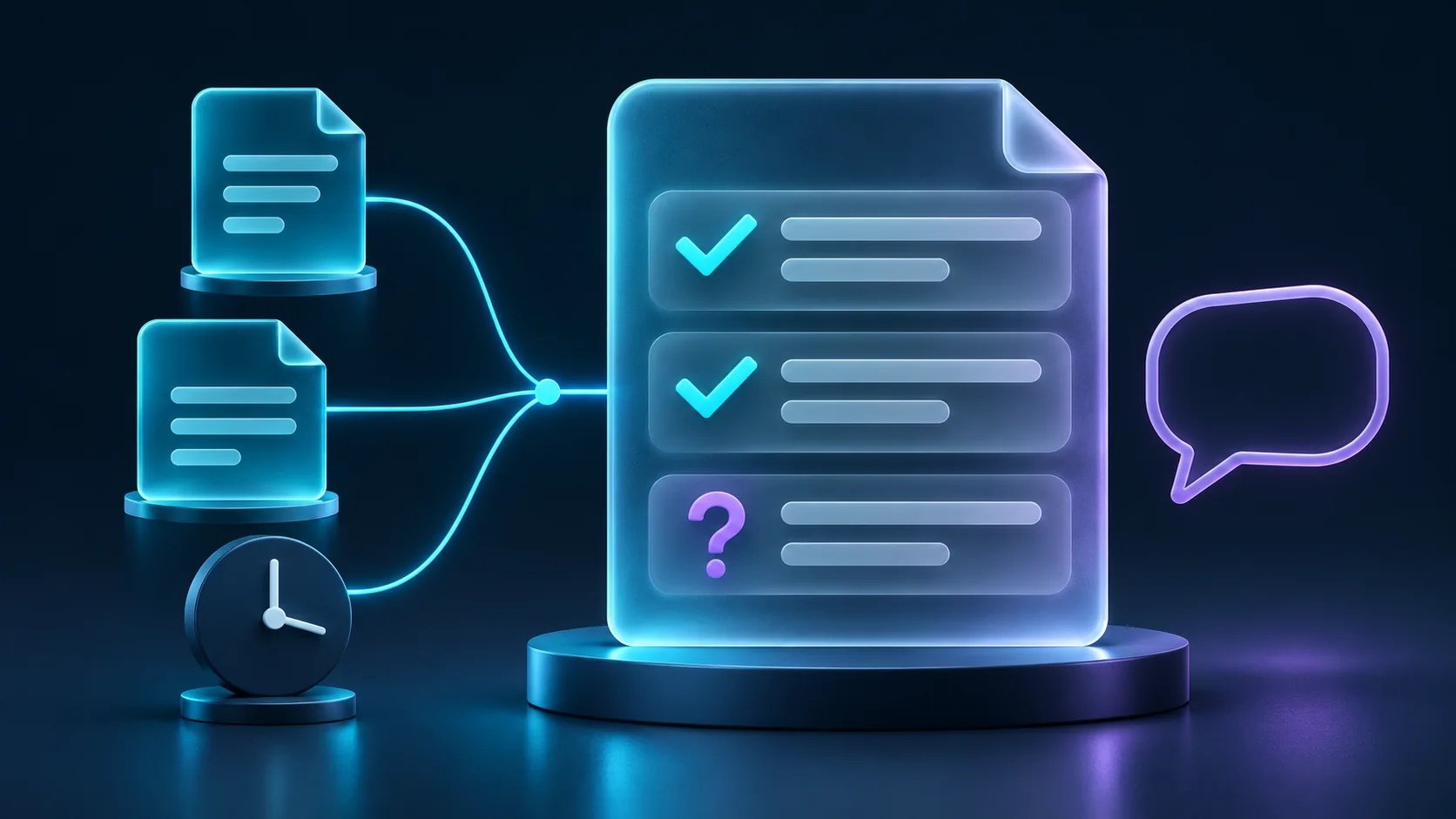
An AI-generated meeting brief is useful when it helps the person taking the call ask a better question. It becomes a problem when a polished summary quietly combines the wrong opportunity, an old note and an assumption about what the customer has agreed. Fluency does not establish that the underlying account context is correct.
OpenAI’s November 17, 2026 ChatGPT for Sales announcement includes preparation using CRM history and customer conversations. That is a timely reason to examine the brief itself, rather than treat another connection as a finished sales process. My starting point is a small, traceable preparation document: the right record, the evidence, the uncertainty and the next conversation.
Choose the decision the call needs to support
Before asking an assistant to summarize everything, define the meeting. Is it an initial fit discussion, clarification of a quotation or a follow-up on an agreed action? Those calls need different context. A broad company profile can be accurate and still leave the salesperson unprepared for the actual question the customer expects to resolve.
Write one sentence describing the purpose and one question that should be answered before the call ends. Then choose the minimum relevant inputs. For a quotation discussion, that could mean the current enquiry, the applicable proposal and the latest confirmed customer message. It does not automatically require an export of the entire customer database.
Match the record and the timeline
A familiar contact name does not prove that every associated note concerns the same purchase. HubSpot’s record-association guide illustrates how contacts, companies, deals and activities can be connected. That is a useful reminder to inspect relationships, not evidence that a connected assistant has automatically selected the correct opportunity in your account.
Ask the reviewer to confirm which enquiry or deal the brief covers and which records each important statement comes from. Include the source date and the time the brief was prepared. A recently retrieved note can describe an old conversation; retrieval time and the event’s date are different pieces of information.
If records disagree, keep the disagreement visible. A newer note may change the interpretation, but recency alone does not prove authority. An unapproved internal suggestion is not equivalent to a customer commitment. The preparation document should explain what needs checking, rather than silently resolve every conflict into a confident story.
Separate evidence, interpretation and unanswered questions
Use three clear categories. Evidence is what an identified source actually supports. Interpretation is the team’s explanation of what that might mean. An unanswered question is something the call must clarify. These are working distinctions for the brief, not a claim that a language model can reliably classify every statement without review.
For example, a message asking for available appointment times supports an interest in scheduling. It does not establish an approved budget, a purchase decision or consent to an unrelated campaign. Keep the original source available beside the summary so the person responsible can check the wording when the distinction matters.
A practical instruction is to request a source for each material claim and to mark missing or conflicting information explicitly. If the assistant cannot find support, the useful output may be a question. Do not reward the document for filling every field when leaving one field unresolved would prevent a misleading customer conversation.
Work through a hypothetical service-business brief
Imagine a home-services business preparing to discuss a new commercial job with an existing contact. An earlier opportunity concerned a different property, and an old note says the customer was ready to proceed. An assistant combines both opportunities and writes that approval has already been given for the new job. This is an invented example, not a reported client incident.
The reviewer checks the linked opportunity and finds that the statement belongs to the earlier project. The brief is corrected before the call. The purpose is now to confirm the new scope, decision process and timing; approval remains an open question. No made-up price, readiness score or promised completion date is needed to make the document useful.
Keep the resulting brief short enough to use during preparation. The following structure is a suggested working format, not a vendor feature or an account configuration I have tested. A business can apply the same review to a manually assembled note before adding an AI connection.
- Purpose: the specific decision or question this call should advance.
- Confirmed context: the relevant record, source and date for each material fact.
- Open questions: missing information, conflicts and assumptions to verify.
- Conversation plan: the approved offer context and a few useful questions.
- Ownership: who reviews the brief and who records the agreed next action.
Keep preparation separate from actions
OpenAI notes that app availability varies with the app, plan, region and workspace context, and that supported capabilities differ. Check the actual connection and permissions before planning a pilot around it. This article does not confirm a particular Canadian account’s access, a working CRM integration or a completed product test.
For an initial pilot, I would keep the task to retrieving permitted information and drafting a brief for review. Sending a follow-up, changing an opportunity stage and creating a task are separate actions with different consequences. A document saying that an update was prepared is not proof that the CRM record was saved.
My Airport Kia work connects campaigns, CRM analysis and practical follow-up tools. The Classy messaging case also shows why context needs to survive a human handoff. These examples explain my approach to the work; they do not imply that ChatGPT for Sales is deployed in either operation. Agree the actual integration scope before connecting another system.
Review whether the brief helped the conversation
Evaluate a small pilot with reviewable evidence. Could the reviewer open the sources? Were record mix-ups, outdated claims or unanswered questions visible before the call? Did the agreed next step reach its actual owner afterwards? Keep preparation quality separate from a claim that the tool increased sales or shortened the sales cycle.
After the meeting, distinguish what the customer confirmed from what the team had expected. Record the approved next action through the business’s existing process and verify the saved result. If a proposed message needs review, keep it as a draft until that review happens. Avoid letting an attractive brief become a second, inconsistent customer record.
The goal is a better prepared person and a clearer handoff. If the CRM associations or source material remain unreliable, fix that foundation first. AI can help assemble context, but the business still needs an accountable reviewer who knows which question matters and what the customer actually agreed.
Key takeaways
- Start with one call purpose, not an unrestricted data dump.
- Check the opportunity, source date and meaning of each important claim.
- Keep evidence, interpretation and open questions distinct.
- Review the brief before any message or CRM change, then verify the actual saved outcome.
Sources & further reading
Primary documentation reviewed November 21, 2026. The sales announcement is dated November 17; the connected-apps page displayed a relative update of yesterday when reviewed, and HubSpot displays September 16, 2026. These sources describe vendor products, not independent evidence of performance or automatic cross-product compatibility. Availability and permissions must be checked in the actual account. The brief structure, review method and service-business scenario are the author’s practical analysis; the scenario is hypothetical. No customer records, personal product trial, deployed ChatGPT for Sales connection, conversion result or sales-cycle improvement is claimed.